Tag Archive for: Pittsburgh

St. Stanislaus Kostka

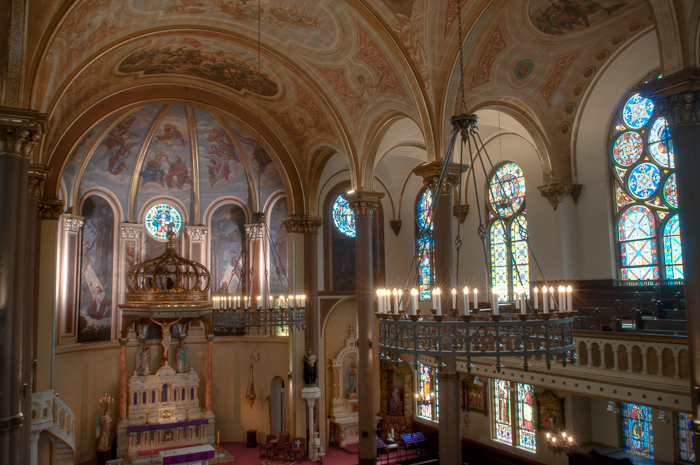
I went to St. Stanislaus Kostka in the Strip District on the Saturday before Saint Patrick’s Day and every good Pittsburgher knows that Saturday is the day when you can find beer at breakfast and more revelry than most would bargain for in Market Square.  I made the mistake of scheduling four churches that day.  After finding a parking spot near the church, a near miracle in itself, I decided to stick with the plan.  And I’m glad I did—these churches are beautiful. 

St. Stanislaus is a Polish Catholic church and the structure is roughly 117 years old.  The church has been preserved as a National Historic Landmark and is located at one end of the main stretch of market vendors on Smallman Street.  According to a helpful staff member who took some time to show me around, the church hired a lighting designer about a year ago and all lighting fixtures were replaced and special ceramic halide lights were installed on the columns to illuminate the murals on the ceiling with a neutral light made to mimic daylight.  Although, I think it made a striped pattern that is only visible in photos.  I definitely didn’t notice the striping while at the church.
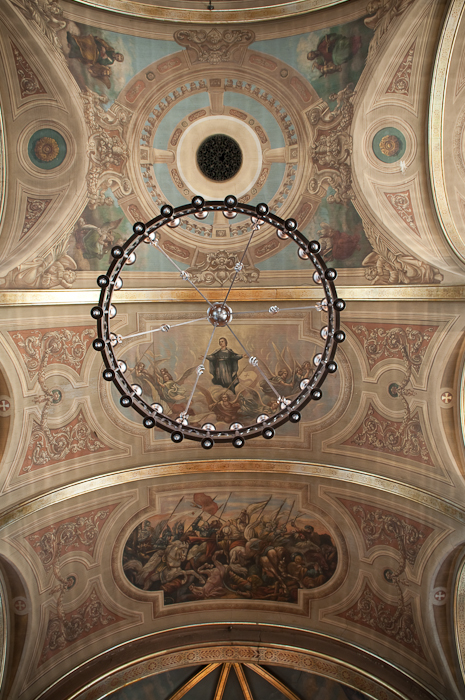
New chandelier

St. Stanislaus Kostka


First Lutheran Church of Pittsburgh

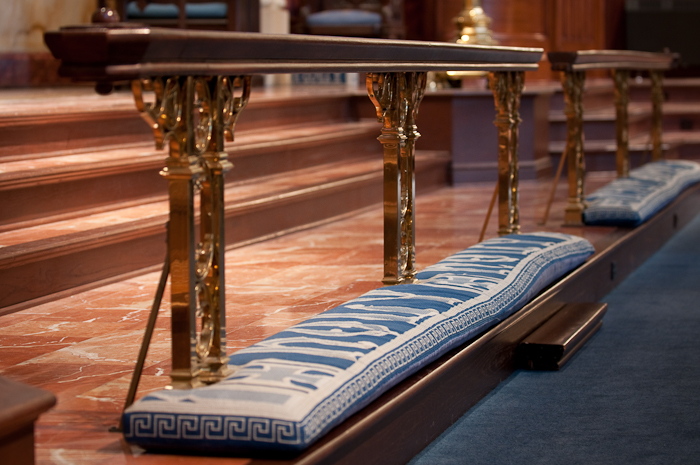
First Lutheran Church of Pittsburgh has a very high church feel to it.  My first clue to the formality of this church was overhearing a sister address the church secretary with a Miss preceding her first name.  Despite the formality, there were certain aspects of the church interior that caught my attention. This prayer rail and kneeling cushion at the altar seem to be welcoming and reverent at the same time.

Prayer rail

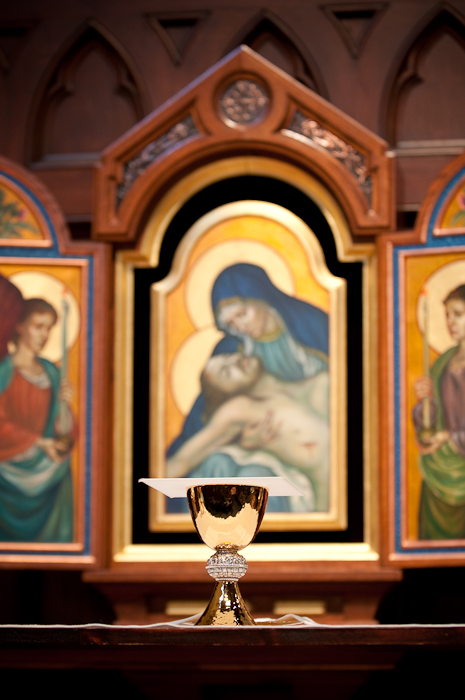
This communion chalice, with the artwork of Christ in the background, is presented in such a pristine condition that I am reminded of God’s purity and ultimate sacrifice for us.  It’s really difficult for us to be mindful of just what God did for us by offering up his son as a sacrifice to cover our sins.  That’s what communion is all about – remembering the ultimate sacrifice.  

Communion

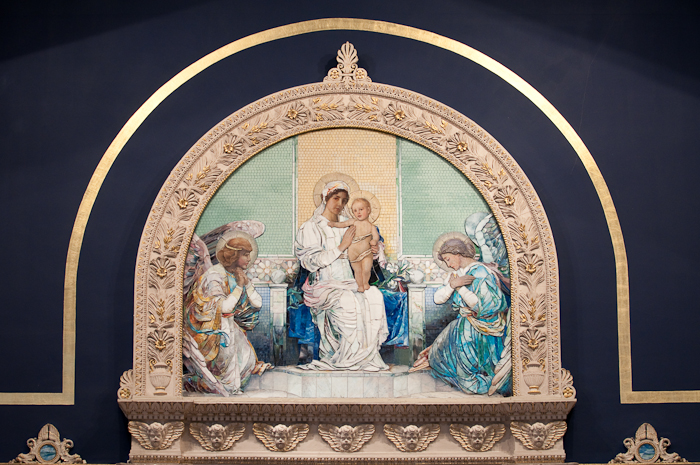
Here’s a beautiful mosaic above the church’s altar.

Mosaic

Smithfield United Church of Christ

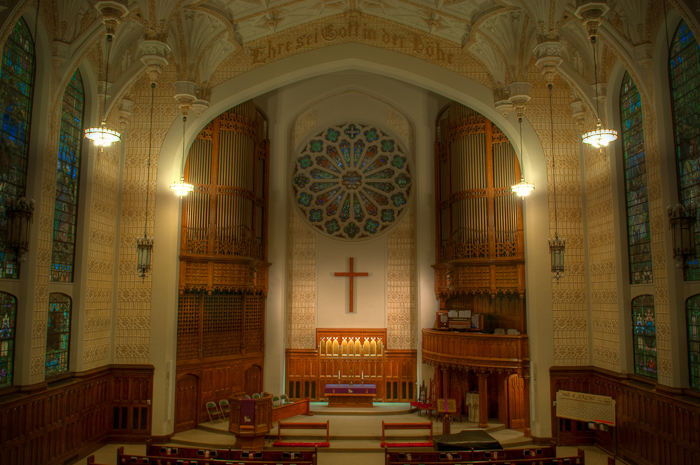
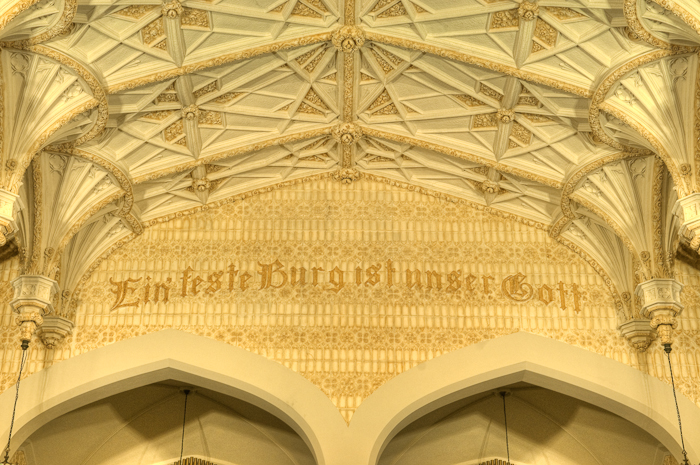
The sanctuary of Smithfield United Church of Christ is on the second floor of the building.  A church custodian told me that when the church was built in the ‘20s, it was decided that the sanctuary should be above street level to put some distance between it and the riffraff on the streets of downtown Pittsburgh.  This church has a very ornate ceiling.  Apparently the congregation that built the church structure was predominately made up of German immigrants, hence the German inscriptions at the front and back of the sanctuary: Glory to God in the highest and God bless this city. 


Sanctuary of Smithfield United

Ceiling and back wall

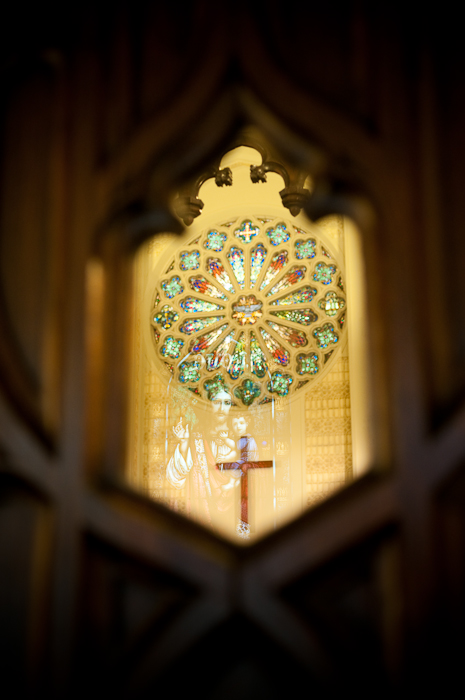
My favorite image of the day is this view of the sanctuary through a small window with a reflection of Christ’s imagine from the stained glass windows opposite the doors to the sanctuary.  

Reflection

First Presbyterian Church of Pittsburgh

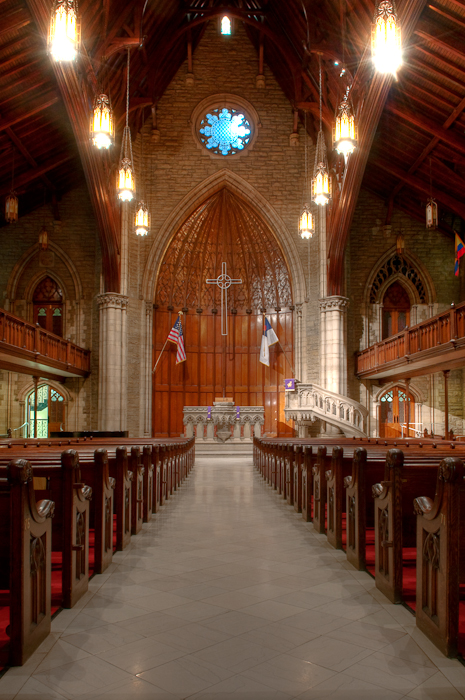
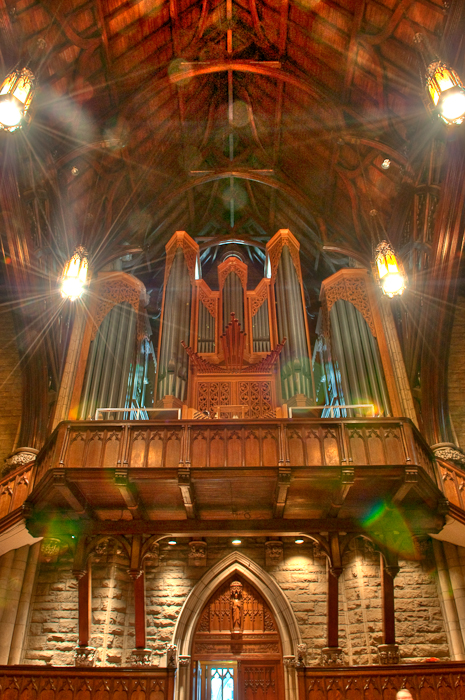
I went to First Presbyterian Church of Pittsburgh on my lunch hour today and the sanctuary was completely empty.  I felt like I was all alone except that I could hear a faint buzz of activity in the church’s large cafeteria below.  Two things struck me about this church: it has gorgeous woodwork and a massive organ.  The sanctuary is completely symmetrical, other than the pulpit to the right of the altar.  Something about this church made me feel like I could have been far away from home.  Maybe it was the solitude that made me feel that way.  Regardless, the church is very beautiful and I can’t imagine what it would cost to build such a structure today.  It’s truly a work of art and an act of worship to create such a beautiful church.  First Presbyterian is adjacent to Trinity Cathedral and across the street from The Duquesne Club on Sixth Avenue downtown and a sandwich board on the sidewalk in front of the church advertises daily lunch specials as “the best kept secret in the ‘burgh.”


First Presbyterian sanctuary

First Presbyterian sanctuary


Organ at the back of the sanctuary

Organ at the back of the sanctuary

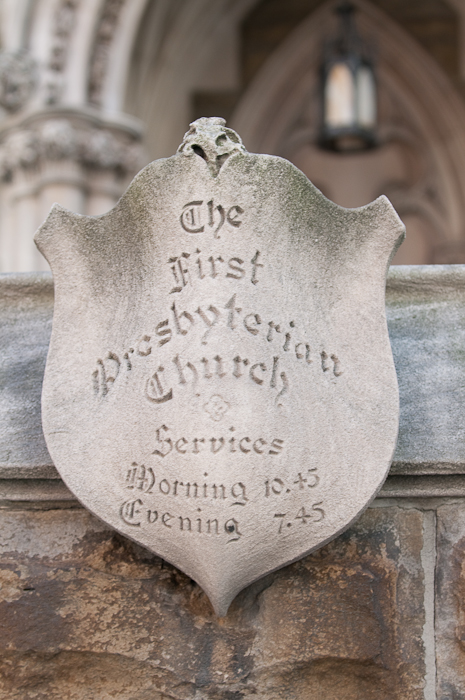
Stone sign at the wall along the sidewalk

Stone sign at the wall along the sidewalk


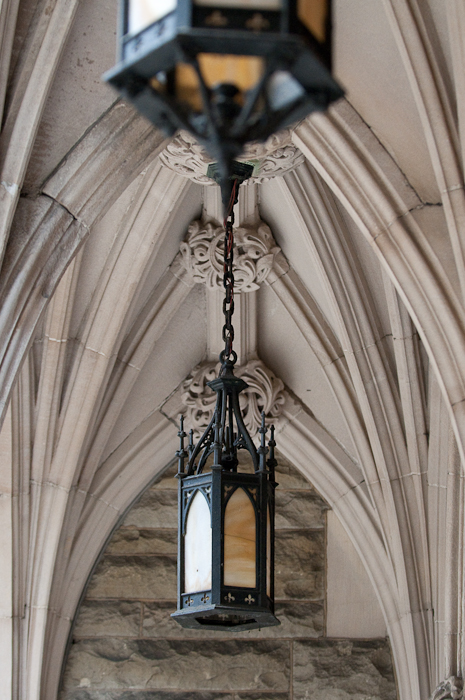
The church exterior is made of beautiful stone and accented with gothic lanterns.

The church exterior is made of beautiful stone and accented with gothic lanterns.


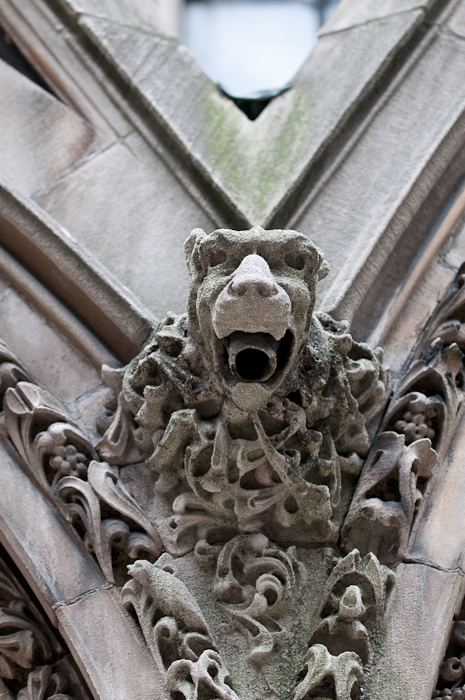
A gargoyle and drainage pipe.

A gargoyle and drainage pipe.


St. Nicholas Croatian Catholic Church

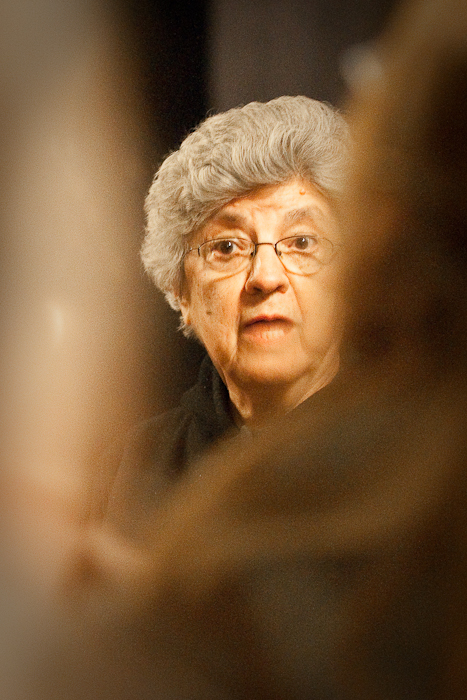
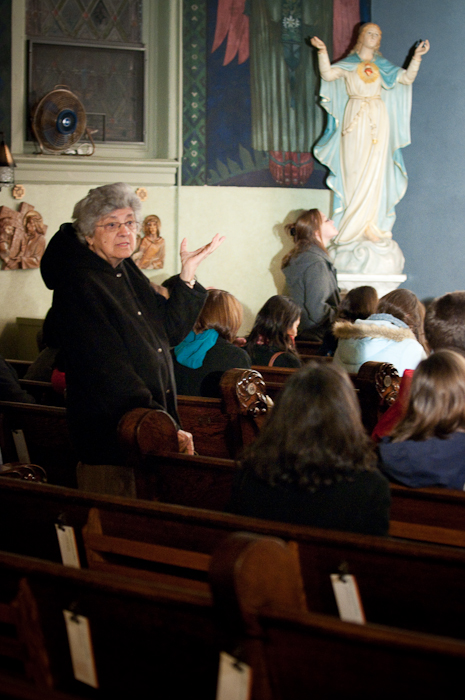
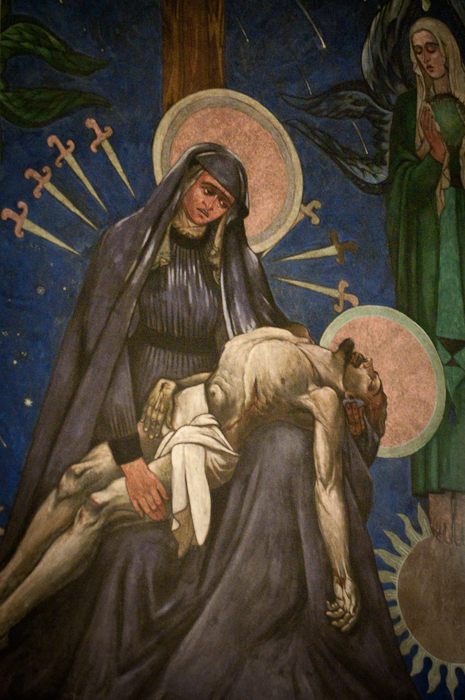
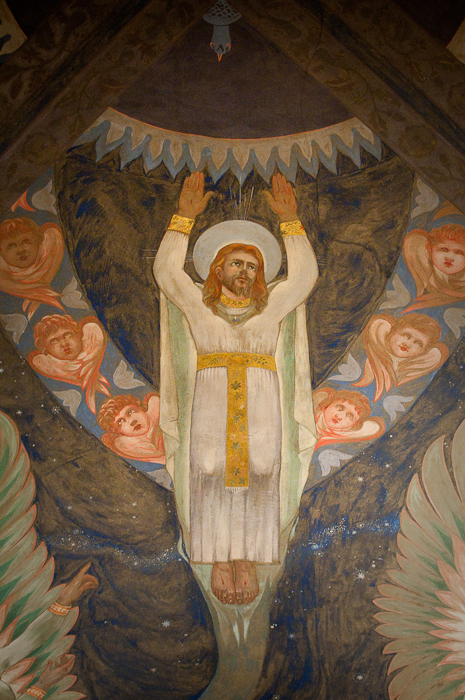
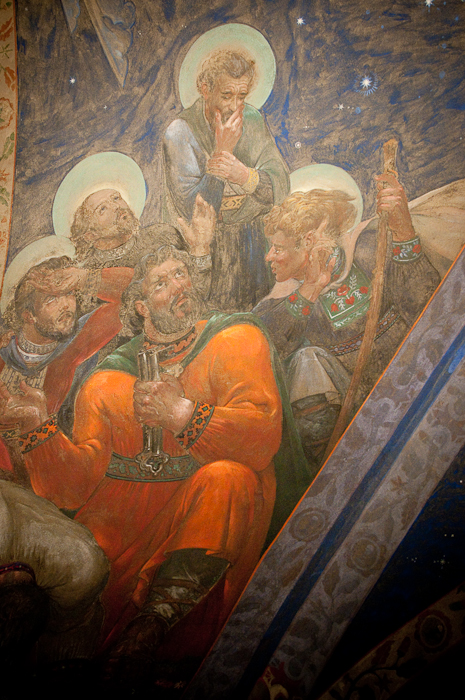
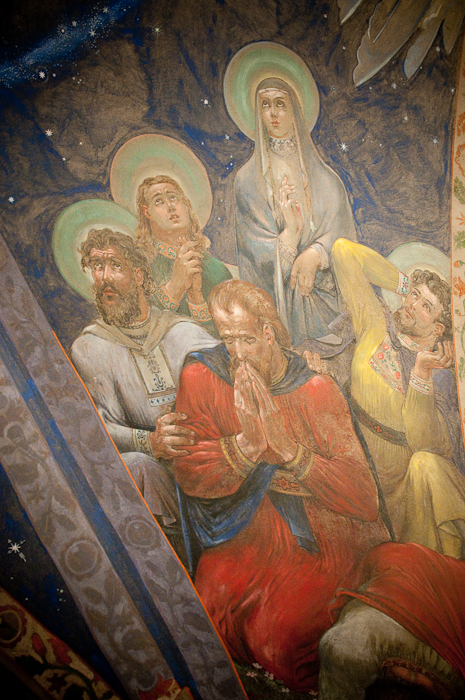
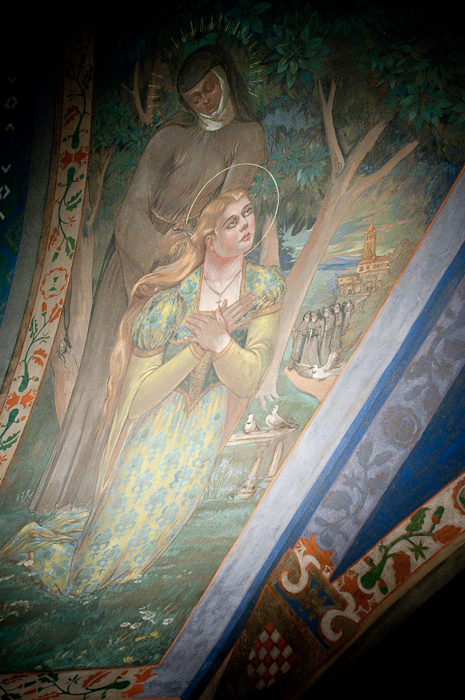
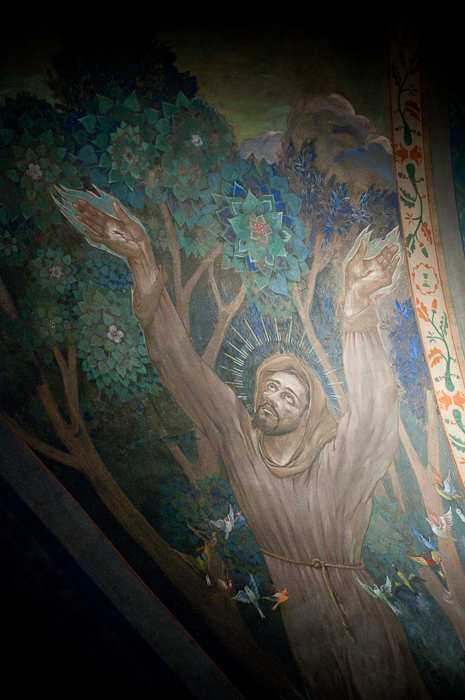
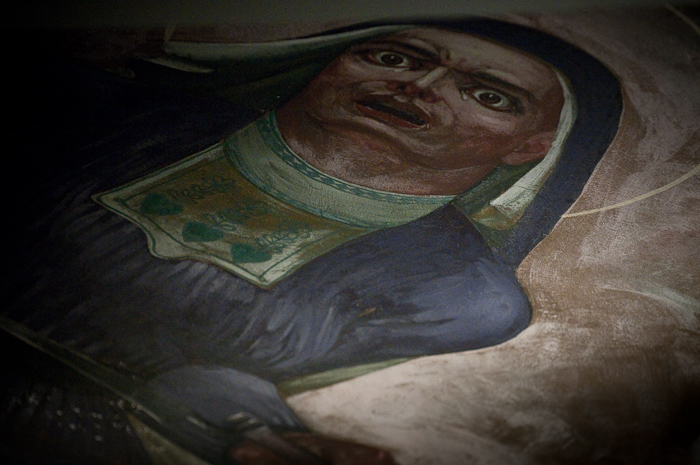
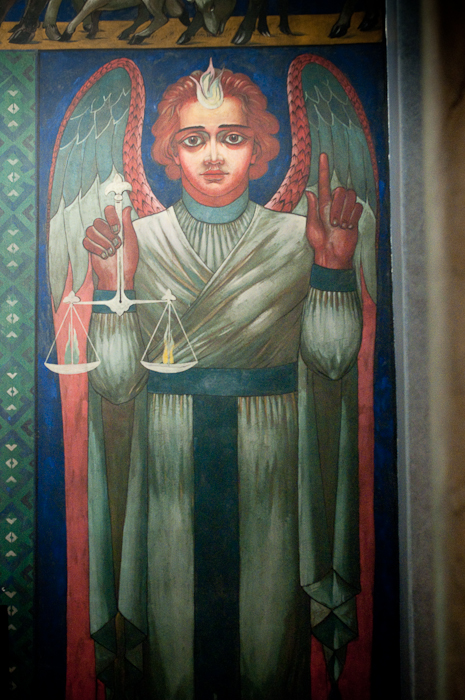
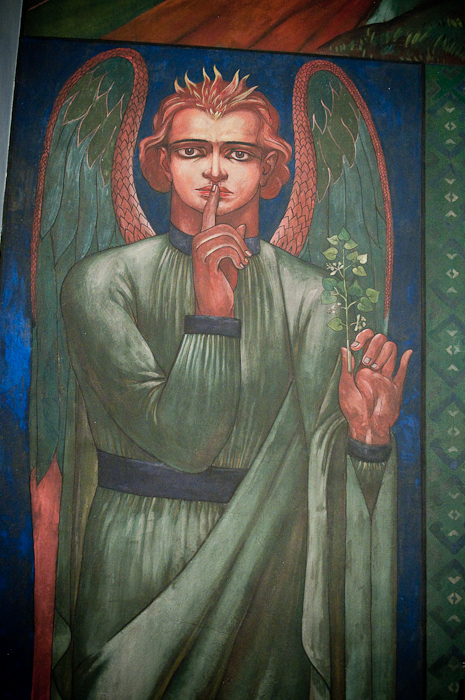
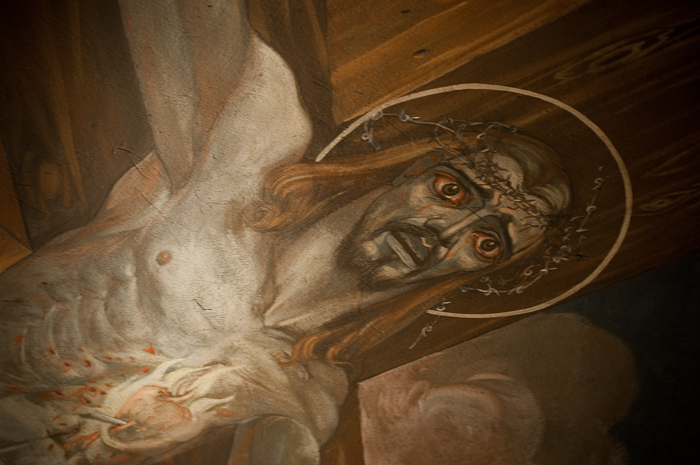
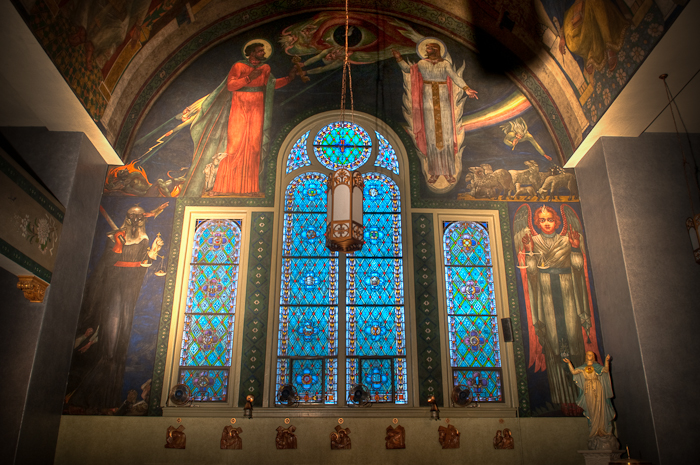
On Wednesday, I visited St. Nicholas Croatian Catholic Church, the one off of Route 28 in Millvale, Pa.  This will likely be the most unusual of entries for my project, The Churches of Pittsburgh.  Just look at some of the photos from this shoot and I’m sure you’ll agree.  I photographed each of the murals before a crowd of students arrived for a tour.  The tour guide, Mary, met me there early and was very gracious to accommodate me.  She is a life-long member of the church and will tell you that her mother was the first child to be baptized there.  She is a veteran tour guide and takes her role seriously.  Mary dimmed the lights because she uses two large spotlights to emphasize talking points during the tour and, she added, “because it’s a more dramatic presentation.”  I used a wide-angle lens on a tripod before the tour and a telephoto lens during it to capture some of the detail I overheard as Mary guided the group from one mural to the next.  You could see all the murals from the center of the moderately sized sanctuary. 

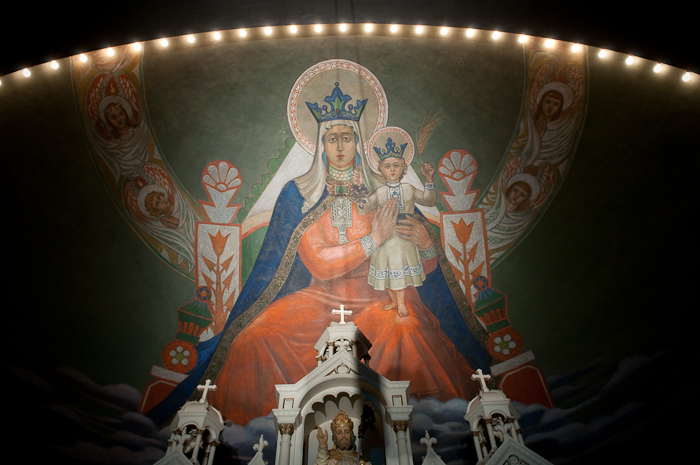
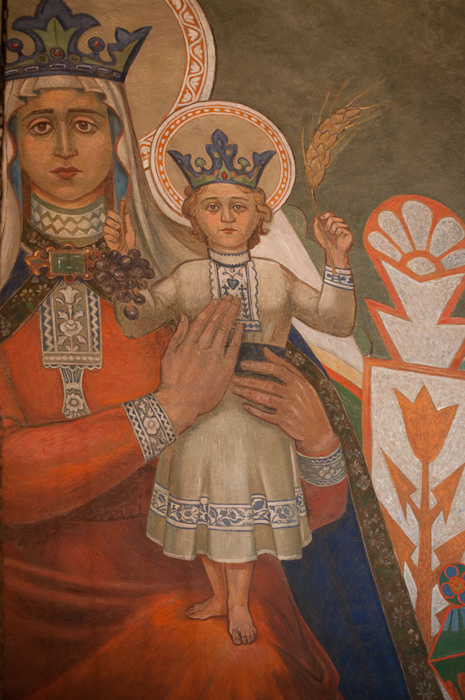
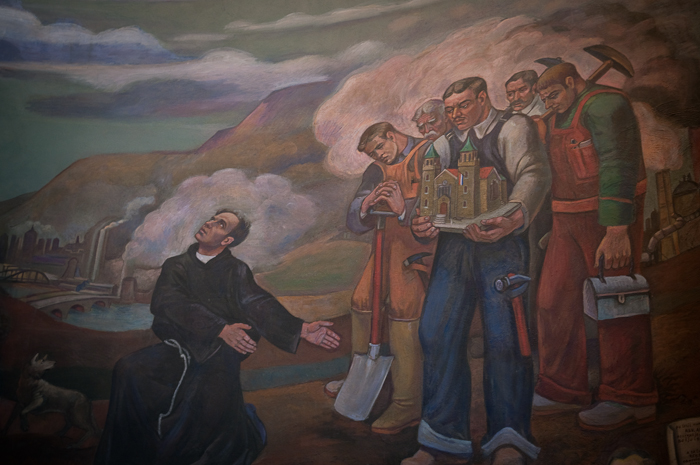
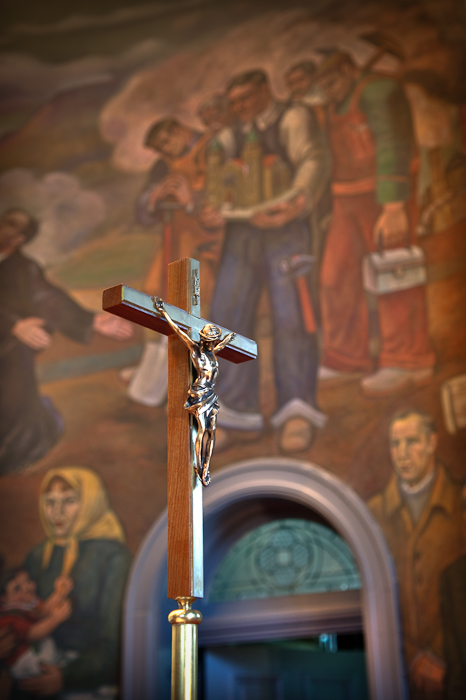
Artist Maxo Vanka was a Croatian immigrant who completed the first set of murals in 1937.  The tempera paintings portray iconic scenes of the Croatian Catholic faith with social commentary on war, society and life in general for immigrants at that time. 

What blows my mind is the fact that Vanka was an atheist.  I can’t imagine clergy commissioning an artist who doesn’t share the faith of the church.  Anyhow, that’s my very small thought in this great, big world.  The murals have been around a lot longer than I have and still attract tourists and regulars for mass.  It just didn’t feel like an atmosphere that inspired me to worship.
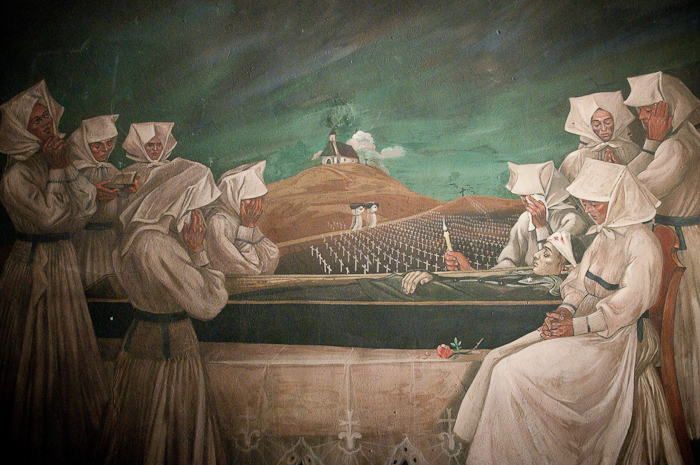
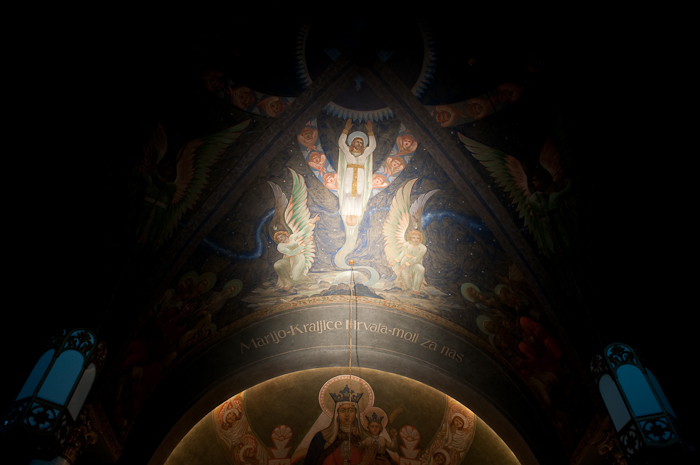
Mary, our tour guide, pointed out that Vanka painted Mary, the blessed mother, with “peasant hands.” I am thoroughly confused about why Mary is at the center of most sacred art.  Yes, she is the mother of our savior by virgin birth, but my understanding holds Jesus to be at the center of everything.  And why pray to Mary when we can go directly to God?  The script above the altar reads, “Mary, queen of Croations, pray for us.”